Trip to Morgan’s Falls
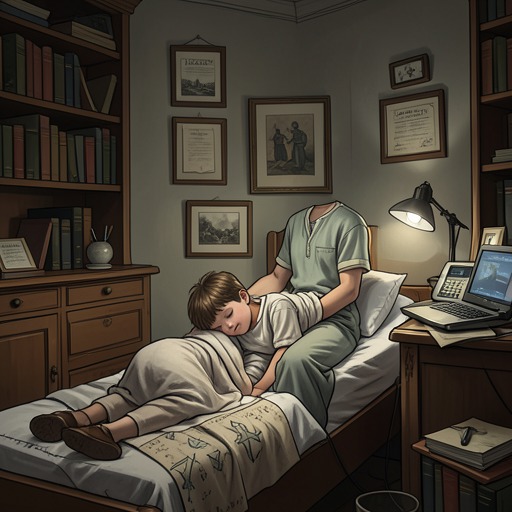
Klara and the SunThe Trip to Morgan’s Falls turns a promised outing into an encounter with Josie’s concealed illness and the Mother’s grief over what may be lost. Josie never reaches the waterfall: the Mother recognizes that she is sick, leaves her at home, and takes Klara instead. At the falls, she asks Klara to act as though she were Josie, briefly making the artificial companion stand in for the absent child. The excursion offers a glimpse of the Mother’s longing, but it cannot secure the reassurance she seeks; on the drive home, Klara’s hope that Josie will recover becomes a subject of direct scrutiny.
Promise and Warning Signs
The outing begins as a bargain intended to encourage Josie to recover. The Mother promises that, if Josie is well by the weekend, they will go to Morgan’s Falls, a place Josie still loves. Josie accepts the condition and asks that Klara come too, explaining that Klara has been outside only once, and then only nearby. The Mother agrees, so the excursion initially joins Josie’s anticipated pleasure with her wish to share a new experience with Klara.
By Friday, Josie is confident she will be well enough to go. She tries on different outfits and studies herself in the long wardrobe mirror, sometimes asking Klara what she thinks. Klara encourages her, but recognizes that she holds something back when praising her appearance. The narrator’s retrospective account makes this restraint part of the event’s forewarning: the Sunday morning’s trouble will bring sadness and teach Klara how much she still does not understand, yet it will not seem wholly unexpected.
Sunday breakfasts have their own tension. When the Mother is home rather than leaving after a quick coffee, ordinary questions can lead toward uncomfortable subjects. Klara had once thought that avoiding particular topics, such as Josie’s educational assignments or social-interaction scores, might keep breakfast comfortable. Her later observation complicates that assumption: the unease is not confined to any single subject. Against that background, the family’s departure carries a strain that Josie’s bright appearance cannot quite conceal.
The Outing Divides
Before leaving, the Mother embraces Josie for so long that she introduces a rocking motion to disguise the length of the hug. Josie does not mind the embrace, and when they separate Klara sees the rift between them mended. The reconciliation seems to clear the last obstacle to the trip. But as Josie puts on her padded jacket, weariness passes over her; after she notices Klara watching, she smiles brightly. A hurried step on the way to the car supplies another small sign that the appearance of readiness is fragile.
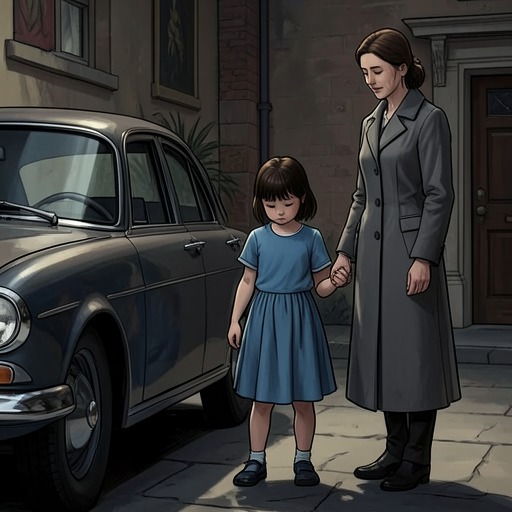
The Mother watches from behind the windshield as Josie crosses the loose stones with an almost conspicuous skip and opens the passenger door herself. Klara, who has never been in a car, manages to take her rear seat without delay, relying on the many passengers she and Rosa had previously watched. The tense silence returns. Josie looks away from the Mother and toward the house, while the Mother watches her rather than the approaching Melania Housekeeper, who carries the shapeless bag containing, among other things, Josie’s emergency medicines.
As Klara struggles with the seat belt, the Mother confronts Josie: “You think you have me fooled, don’t you, girl?” Josie asks what she means, and the Mother tells her she cannot hide that she is sick again. When Josie pleads to go, the Mother says she knows Josie is sick and objects that she did not tell anyone, allowing the family to set out as if they had the whole day ahead of them. Josie insists she is strong enough, but the argument exposes the difference between the promised condition of the trip and the state the Mother believes she can see.
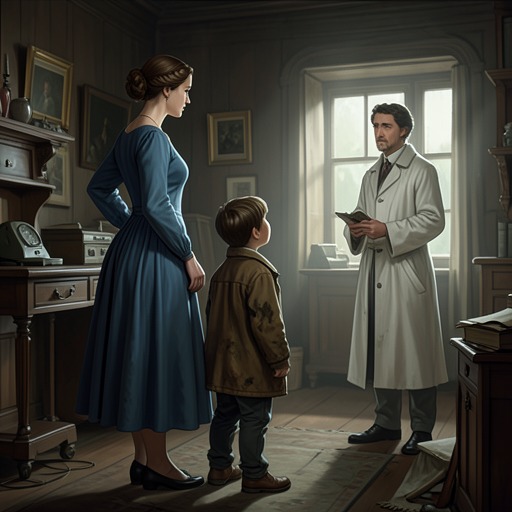
The Mother tells Melania Housekeeper to help Josie out of the car. Josie asks her mother not to do this, and the Mother answers that the illness is not Josie’s fault, but keeping it secret is unfair. Klara offers to do what is best for Josie and prepares to get out too. The Mother stops her, saying Josie is too sick to go but that Klara and she can still continue. Josie then tells Klara to go, apologizing for being sick all the time and calling herself a downer; she says Klara will love the waterfall.
Klara understands that continuing could give her crucial insight into Josie’s situation and how to help her. But she also sees how clearly Josie’s sadness shows as she walks back across the loose stones. With nothing left to hide, Josie’s walk is fragile, and she accepts Melania Housekeeper’s support without making a fuss. Klara watches the two of them go inside before the Mother starts the car. The outing therefore proceeds by separating its intended companions: the child for whose recovery it was promised stays home, while the guest she had invited goes on in her place.
The Falls and the Imitation
The Mother drives on, and the route eventually narrows to a road scarcely wider than the car, marked by muddy parallel wheel tracks and pressed in by trees. At the end of it she tells Klara they must continue on foot and asks whether she can manage. The climb follows a rocky, muddy path; the Mother repeatedly stops to let Klara catch up. The terrain gives the Mother’s earlier concern about whether Josie could manage the trip a practical force, even as the confrontation in the car makes clear that her decision is bound up with fear for Josie’s health.
On the way, Klara sees a bull standing in a field beyond a fence. Though it is far away and cannot cross, its face, horns, and cold eyes make her feel that it carries anger and a wish to destroy. She experiences its presence in the Sun’s pattern as a kind of error, as if the creature belonged deep in mud and darkness rather than on the grass. The Mother reassures her that it cannot touch them and urges her onward. Soon they reach a field with fourteen rough wooden tables, each with attached plank benches. Adults, children, AFs, and dogs occupy the area; the waterfall stands just beyond, larger and fiercer than in the magazine Klara had seen, and the gray sky hides the Sun.
At first the Mother leaves Klara at a table while she goes to buy coffee from a wooden hut with an open counter. Later, her face softens. She says it was right not to bring Josie because Josie was unwell, but now that they are there together she misses her. Looking toward the passers-by, the dogs, and the AFs, she asks Klara to be Josie for a little while. She reminds Klara that she had done this once before, on the day they brought her home from the store.
The Mother does not immediately ask Klara to reproduce a walk or any other extended action. Instead, she asks how Josie would sit if she were at the table: Klara is smart, she says, and would know that Josie would not sit as Klara is sitting. Klara adjusts her posture. In her vision, the Mother’s narrowed face fills the central boxes while the waterfall remains at the edges; her expression seems to vary from one box to the next, moving between cruel laughter and sadness. The natural and human sounds around them fade from Klara’s attention as the Mother prepares to speak.
Klara then speaks as Josie, reassuring the Mother that she has arrived and is fine. The Mother leans farther across the table, and Klara sees joy, fear, sadness, and laughter in her face. In the surrounding quiet, the Mother repeats under her breath that this is good. Klara, still in the role, says she is only a little tired, credits Melania Housekeeper with being right, and tells the Mother there is nothing wrong with her. The Mother apologizes for not bringing Josie, and Klara answers that she understands the worry and is all right.
The performance cannot remain comforting. The Mother challenges the confidence she hears, asking what a child who loves life and believes everything can be fixed could know. When Klara, speaking as Josie, says she will get well soon and knows how it will happen, the Mother invokes Josie’s sister Sal, who also made promises but could not keep them. Josie’s illness is not the same as Sal’s, Klara replies in character, and she will recover. The Mother asks her to explain how; then she ends the exchange and walks away. The scene thus shifts from an imitation offered as consolation to a confrontation with the Mother’s fear that hope may repeat a promise that failed before.
Return and Private Agreement
The Mother stops by the wooden rail at the edge of the waterfall, standing with her back to Klara amid the mist. At last she turns, waves Klara over, and invites her to look at the waterfall, which she has never seen before. Klara says it is more impressive than the magazine image. The Mother calls it something special and says she is glad Klara has seen it, then insists they return because she is concerned about Josie. Although she had asked Klara to impersonate her daughter, she now addresses Klara by her own name, making clear that the imitation is over.
The descent is silent. The Mother walks quickly, at least four paces ahead, and Klara must take care on the steep path. When they pass the place where the bull stood, Klara looks across the field, but it is gone; she wonders whether it has been taken back down into the ground. On the drive down, the Sun appears between clouds. Klara sees groups of seven or eight tall trees on the horizon and recognizes that a distant field’s apparent pattern is a flock of sheep. More than forty fill one field; unlike the frightening bull, they seem kind. Four especially gentle sheep stand still in a neat row, their mouths moving as they eat.
The Mother thanks Klara for being with her and says it made the day less bad. She suggests they might do the same again if Josie is too sick to come out, and asks whether Klara would mind. Klara agrees, but only on the condition that Josie is unable to come. The Mother then asks that they say nothing to Josie about the imitation, because Josie might take it the wrong way. Klara agrees to keep the episode private. Their return therefore ends not in a shared family memory but in a secret arrangement between the Mother and Klara, formed around Josie’s absence.
The silence resumes as they pass the distant metal-box village. Then the Mother returns to what Klara had said about Josie getting well, asking whether the suggestion of special help was merely talk or whether Klara expected something more solid that the rest of them had not seen. Klara answers that the Mother, the doctor, and Melania Housekeeper have considered Josie’s condition carefully and that it is very concerning, while still expressing hope that Josie will soon recover. The available account leaves the Mother’s further response unresolved, but the question gives the trip its final emphasis: her request for an imitation has not dispelled her uncertainty about whether Josie can be saved.